
Behind The Build
We Prototype The Impossible
Then Ship It.
Brandixo.pro is the engineering backbone for studios who need to validate risky mechanics in weeks, not months. This is our technical playbook—how we de-risk complex systems, optimize for the 2GB RAM floor, and build interfaces that feel like gameplay.

The 60fps Promise
Maintaining frame stability during complex spell-casting sequences (200+ particles) requires continuous collision detection, not discrete checks.
> Solver Iterations: 8
> Latency: <16ms
Common Pitfall
- ✕ Tunneling Errors: Fast-moving objects passing through walls.
- ✕ Jittering Meshes: Floating point precision loss in large worlds.
Rigid vs. Soft-Body Reality.
Most mobile studios default to rigid body physics for performance. In our fantasy RPG projects, we simulate cloth drag and wind resistance on the GPU. Why? Because "weight" is a narrative mechanic. When a cape billows realistically, the player believes the world.
"We don't just simulate the world; we simulate the player's perception of it. If it feels heavy, the code must behave like it."
— Lead Systems Engineer
Scenario: The Cloth Test
Context: Player character enters a wind tunnel in "Lorencia" zone.
Constraint: Must hold 60fps on Samsung A53 (2019).
Solution: We bypassed Unity's built-in cloth solver for a custom Compute Shader solution, offloading calculation to the GPU. Result: 2.4ms frame time saved.
UI as a Game Character
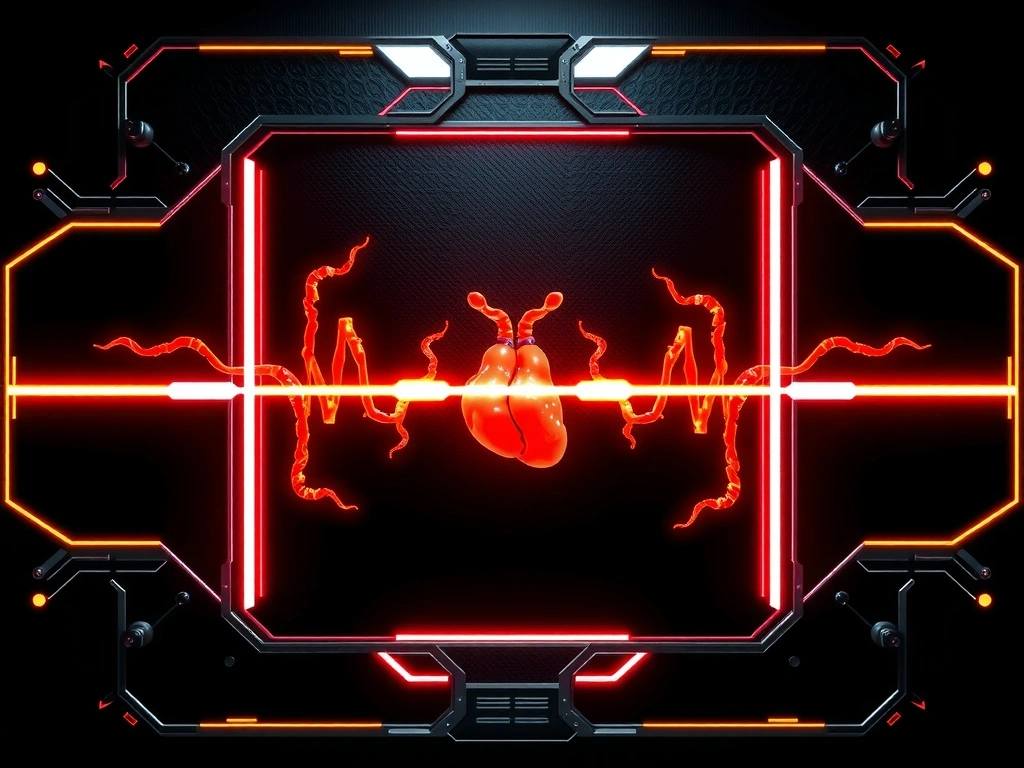
We treat interface elements as diegetic actors within the scene, not overlays. They breathe, react, and carry weight.
Intent-Driven Easing
We map animation curves directly to player intent. A frantic button press gets a sharp, immediate response. A menu open gets a smooth, cinematic ease-out. It’s the difference between a tool and a toy.
Glossary: Diegetic
UI that exists within the game world (e.g., a watch on the character's arm). Our default choice for immersion.
Glossary: Non-Diegetic
Floating HUD elements. Used sparingly for critical combat data.
Motion Checklist
- State Change < 0.2s
- Haptic Confirmation
- Color Coded Status
The 4-Second Rule
No animation exceeds 4s to prevent player fatigue.
The Trade-Off Frame
Every technical decision is a negotiation between visual fidelity, performance, and development time. Here is how we weigh the costs.
Method Note: Evaluation
We evaluate robustness via A/B testing on the "2GB RAM Floor" device cluster. If a feature drops below 45fps consistently, it is flagged for mitigation or removal.
High-resolution textures and dynamic shadows look great but drain batteries rapidly on OLED screens.
Adding complex mechanics pushes launch dates. Investors often overlook this until it's too late.
Unity/Unreal are fast to start but hard to optimize for niche genres. Custom engines are the opposite.
A painterly style often requires heavy overdraw (transparency), killing frame rate on low-end devices.
The Invisible Layer
Audio Fingerprinting
Questions Investors Should Ask
We strictly test on a cluster of 2019-2021 Android devices. If the game drops below 30fps or crashes memory, we aggressively downscale texture resolution and enable object pooling for non-essential assets.
We use a 'Kill or Scale' framework at the end of every 2-week sprint. Features that don't prove their fun factor or technical viability are cut immediately to preserve the timeline.
Yes. We maintain Metal API parity for rendering and optimize specifically for the thermal constraints of the A-series chips.
We track "Time to First Action" and "Retention at Day 1". High input latency kills these metrics, so we prioritize 60fps input response over graphical bells and whistles.
Technical Terminology
Recycling game objects (bullets, enemies) rather than destroying/instantiating them to prevent garbage collection spikes.
Level of Detail. Dynamically lowering polygon count of models as they move further from the camera to save GPU cycles.
User interface elements that exist inside the game world logic (e.g., a character's holographic display) rather than floating overlays.
When a phone CPU slows down due to overheating. Our optimization tests ensure stability even after 30 minutes of continuous play.
Ready to Stress-Test Your Concept?
Send us your vertical slice or design doc. We'll identify the technical risks before you commit to the budget.
Beyoğlu, Istanbul, Turkey
+90 212 555 1234
GMT+3